Beyond ROAS: The Metrics That Actually Matter!
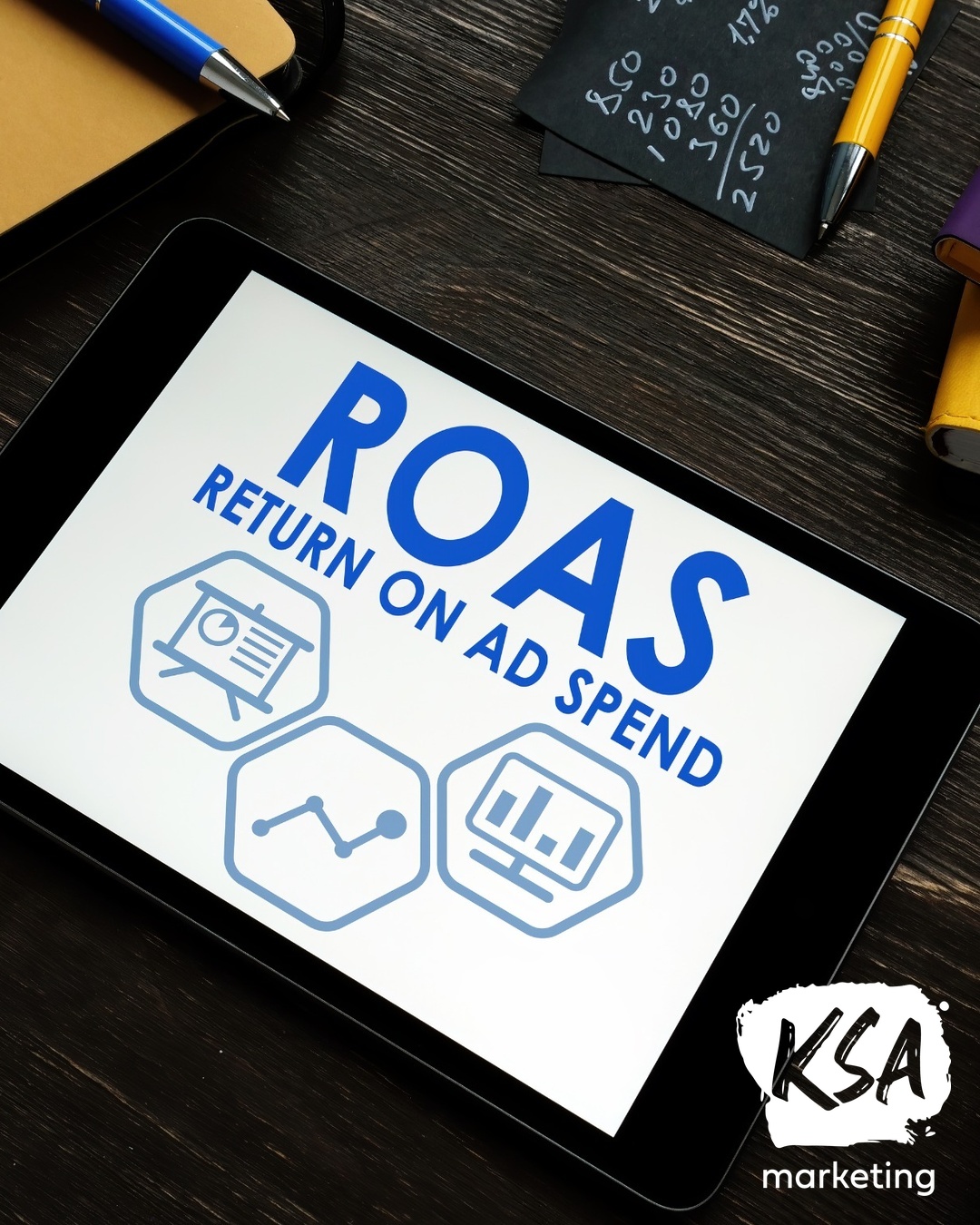
If you work in marketing, especially digital, you’ve probably had a client laser-focused on one number – ROAS (Return on Ad Spend). On the surface, this number looks powerful: for every dollar we spent, how many dollars did we make?
Business owners love it. Ask them how their ads are working, and you’ll hear something like, “We’re at a 5x ROAS – things look great.”
But experienced marketers know that ROAS is one of the most misunderstood and misused metrics in advertising, and when it becomes the only metric guiding decisions, it can actually steer a campaign in the wrong direction.
Why ROAS Can Be Misleading
ROAS Doesn’t Account for Profit
A campaign can have a high ROAS and still lose money. ROAS measures revenue, not profit. If your margins are thin or if your cost of goods sold (COGS) is high, a “good” ROAS can mask the real financial picture.
Here’s an example:
- Your product costs $80 to make
- You sell it for $100
- You spend $20 on ads
- ROAS = 5x (sounds amazing)
- Profit = $0 (because your margins are gone)
ROAS Misses the Full Customer Journey
ROAS measures last-touch or platform-attributed revenue. That means it ignores:
- View-through conversions
- Brand search lift
- Word-of-mouth
- Cross-channel influence
- Halo effects from TV, radio, or PR
- Long sales cycles
When attribution is incomplete (and it always is), ROAS gives credit to the wrong channels and undervalues awareness-building efforts.
ROAS Ignores Customer Lifetime Value (CLV)
ROAS reflects revenue only from the immediate purchase. But many industries win on the back end, not the first transaction. If you’re only optimizing for ROAS:
- You’ll favor products with high short-term revenue
- You’ll throttle acquisition campaigns that bring in high-value customers
- You’ll underinvest in top-funnel programs that drive long-term growth
A low ROAS on a customer who buys only once looks bad. But if they return three more times and spend 4x more later, they may be your most valuable customer.
ROAS Penalizes New Customer Acquisition
Acquisition almost always costs more than retargeting or remarketing. If you look only at ROAS, you’ll end up cutting the campaigns that bring in new buyers (because they’re more expensive) and overvaluing campaigns targeting people who were already going to buy. In other words, ROAS rewards harvesting, not planting.
This can lead to:
- Shrinking remarketing pools
- Plateaued revenue
- Stagnant customer growth
- Misleading sense of campaign success
Digital Media Attribution Models Can Inflate or Deflate ROAS
Where ROAS comes from matters. Different platforms take credit differently:
- Google loves last-click
- Meta loves any-touch
- TikTok often gets ignored because of attribution delays
The result? Your ROAS can swing wildly depending on:
- Which platform reported it
- What attribution window you use
- How long customers take to convert
If you optimize too aggressively to chase short-term ROAS:
- You cut brand spend
- You kill top-funnel channels
- You slow long-term growth
- You narrow your audience
- You increase dependency on retargeting
In other words, you end up with a shrinking ecosystem that costs more and performs worse over time. Sustainable brands don’t optimize for this week’s ROAS; they optimize for long-term revenue.
ROAS Can Punish Top-of-Funnel Campaigns
Awareness or engagement campaigns often have low or no direct revenue attribution, which tanks ROAS even though those campaigns play a critical role in driving conversions later. As a result, marketers might over-invest in bottom-of-funnel tactics and starve upper-funnel growth.
So… Should You Stop Using ROAS?
Not entirely. ROAS is still a useful metric, as long as you don’t treat it like the whole truth. ROAS should be:
- A directional signal
- A short-term indicator
- One of many metrics—not THE metric
What Metrics SHOULD You Use?
- MER (Marketing Efficiency Ratio) – Best for overall performance. MER gives you a full-picture view of how your entire marketing ecosystem performs, not just what a platform claims to have driven.
- Total Revenue ÷ Total Marketing Spend
- Can’t be inflated by attribution issues
- Accounts for every dollar spent across channels
- Shows if your business is actually growing
- Ideal for high-volume or multi-channel advertisers
- POAS (Profit on Ad Spend) – Best when profit matters more than revenue. POAS layers in COGS, shipping, labor, and other costs, something ROAS completely ignores.
- Profit ÷ Ad Spend
- Shows true profitability
- Prevents scaling unprofitable campaigns
- Aligns marketing decisions with finance
- CAC (Customer Acquisition Cost) – Best for growth-focused campaigns. CAC tells you exactly how much it costs to acquire each new customer, a much stronger KPI than ROAS for any program focused on enrollment, leads, or new user growth.
- Spend ÷ New Customers
- Not influenced by platform attribution
- Tracks growth, not just efficiency
- Critical for subscription, education, and B2B programs
- LTV-CAC Ratio – Best for long-term scalability. This metric indicates whether your customer acquisition cost is sustainable relative to their long-term value.
- Lifetime Value ÷ Acquisition Cost
- Focuses on long-term revenue
- Encourages investing in high-value customers
- Helps determine how aggressively you can scale
Which One Is “Best”?
Tracking multiple metrics will give you the best picture of your business, but if you want one single metric to replace ROAS as a guiding star, pick the one that best aligns with your current strategic focus:
- MER is the most stable
- POAS is the most financially accurate
- CAC is best for growth
- LTV-CAC is best for a long-term strategy
The Bottom Line
ROAS isn’t a bad metric, but it’s a dangerous one when used alone. It oversimplifies performance, ignores profit, discounts the full customer journey, and penalizes the very campaigns that drive long-term growth. When brands chase short-term ROAS, they cut awareness, starve acquisition, and ultimately shrink their future revenue potential. The strongest marketers look beyond ROAS, using metrics like MER, POAS, and CLV to understand the true value of their advertising. In today’s multi-touch, multi-channel world, sustainable success comes from optimizing for long-term profitability, not just a flashy ROAS number.
Are You Ready to Stop Chasing ROAS and Start Driving Real Growth?
At KSA Marketing, we don’t chase vanity metrics; we build strategies that actually grow your business. While many agencies optimize for short-term ROAS, we dig deeper. Our team focuses on the metrics that matter, including profitability, customer lifetime value, true acquisition costs, and the overall efficiency of your marketing ecosystem. We help you move beyond misleading platform numbers toward a holistic strategy that drives sustainable, long-term revenue. If you’re ready for an agency that measures what really matters and proves it, KSA Marketing delivers growth you can see, trust, and scale. Contact KSA today to get started.