ROAS vs. ROI: Why the Distinction Matters for Smarter Marketing Decisions
In marketing and advertising, numbers help tell the story of what’s working and what isn’t. Two of the most talked-about (and often mixed-up) metrics are ROAS and ROI. In our last blog, we discussed ROAS in depth, and this blog is focused on the difference between ROAS and ROI. They may sound similar and are closely connected, but they actually answer two very different questions. Knowing the difference makes it easier for marketers, business owners, and leadership teams to feel confident about where they’re spending their time and money.
What Is ROAS?
ROAS, or Return on Ad Spend, measures how much revenue is generated for every dollar spent on advertising. In our last blog (February), we discussed ROAS at length. While this is an important metric, it should never be used alone to determine marketing/advertising success or failure.
Formula: Revenue from Ads ÷ Ad Spend = ROAS
For example, if you spend $1,000 on ads and generate $4,000 in revenue, your ROAS is 4 ($4,000 revenue divided by $1,000 ad spend).
ROAS is a campaign-level metric. It’s most often used by media buyers and marketers to evaluate how efficiently a specific ad, platform, or tactic is driving revenue. Because it focuses only on advertising costs, ROAS is especially useful for comparing performance across channels such as paid search, social, and programmatic media.
Best used for:
- Evaluating individual campaigns or channels
- Optimizing ad performance in real time
- Comparing efficiency between platforms
What Is ROI?
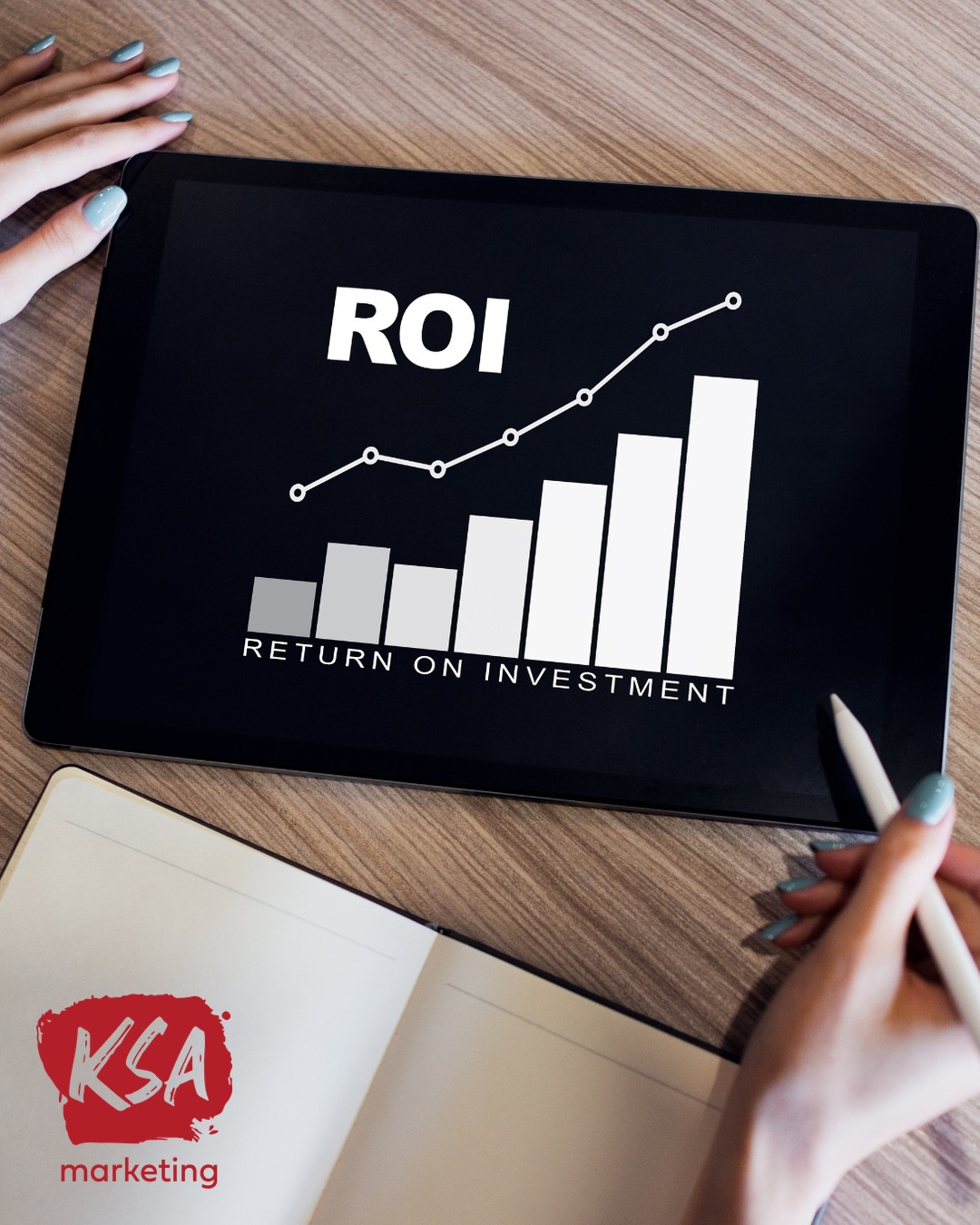
ROI, or Return on Investment, looks at the bigger picture. It measures overall profitability by factoring in all costs, not just advertising spend.
Formula: Revenue − Total Costs ÷ Total Costs = ROI
Using the same $4,000 in revenue example, if your total costs, including ad spend, creative, labor, technology, and overhead, add up to $3,000, your ROI would be 33% ($4,000 revenue minus $3000 total costs divided by $3,000 total costs).
ROI is a business-level metric. It tells you whether your marketing efforts are actually contributing to profit, not just generating sales. Because it includes broader expenses, ROI is often used by leadership teams to evaluate long-term strategy and overall business performance.
ROI is best used for:
- Measuring profitability
- Assessing long-term business impact
- Informing budget and investment decisions
Key Differences Between ROAS and ROI
The biggest difference between ROAS and ROI comes down to scope. ROAS focuses narrowly on advertising efficiency, while ROI considers business profitability broadly.
- ROAS focuses only on ad spend; ROI includes all costs
- ROAS helps optimize campaigns; ROI helps evaluate overall success
- ROAS is tactical; ROI is strategic
A campaign can have a strong ROAS but a weak ROI if other costs are high. Conversely, a campaign with a modest ROAS might still deliver strong ROI if it supports long-term growth, customer retention, or brand equity.
Why You Need Both Metrics
ROAS and ROI aren’t competing metrics; they’re complementary. ROAS helps marketers understand what’s working in the moment, while ROI helps businesses understand what’s working overall. Smart marketing decisions happen when both are considered together:
- Use ROAS to fine-tune campaigns and maximize efficiency
- Use ROI to ensure marketing investments align with business goals
ROAS tells you how well your ads are performing. ROI tells you whether your business is winning. Knowing the difference and when to use each can make the difference between chasing short-term gains and building sustainable growth.
At KSA Marketing, we understand the difference between ROAS and ROI. While ROAS helps us optimize campaigns in real time, we pair it with ROI to ensure every media dollar contributes to real business growth. That means we’re not just focused on how ads perform, but on how marketing impacts profitability, efficiency, and long-term success. Our approach bridges the gap between marketing and leadership. We use ROAS to fine-tune channels, platforms, and tactics, and ROI to guide smarter budget decisions and strategic investments, resulting in media strategies that perform in the moment and deliver meaningful returns over time.
If you’re looking for an agency that understands both the numbers behind your campaigns and the business goals behind your brand, you’re in the right place. Contact KSA today to get started.